Choosing the right machine guarding panel is one of the highest-leverage decisions in a safety project. Wire mesh, polycarbonate, and solid steel each balance protection, visibility, containment, and cost differently. This guide helps engineers, OEMs, and plant safety teams pick the right option (or mix) before requesting a quote.
All three panel styles share the same AMGS modular frame, posts, and quick-connect hardware, so you can standardize on one system and vary fill material by zone. Browse machine guarding panels, configure a custom size in the panel configurator, or lay out a full cell in the guarding layout configurator.
Quick pick
- Wire mesh — Best default for robot cells, perimeter fencing, and most machine guarding — strong protection, good visibility, and lower cost.
- Polycarbonate — Best when operators must see clearly and you need splash, chip, or light debris containment.
- Solid steel — Best for spark/flash containment, privacy, or high-security zones — usually mixed with mesh or poly elsewhere.
Side-by-side comparison
Use this table as a buying filter. Final selection should still follow your risk assessment and applicable standards such as OSHA 29 CFR 1910.212 and ANSI B11 safeguarding guidance.
| Factor | Wire Mesh | Polycarbonate | Solid Steel |
|---|---|---|---|
| Visibility | High (through openings) | Highest (clear or tinted) | None |
| Debris / splash containment | Limited | Strong | Maximum |
| Spark / weld flash | Poor alone (add weld screen) | Moderate (tint helps glare) | Excellent |
| Impact resistance | High (welded steel mesh) | High (impact-rated poly) | Highest |
| Reach-through risk | Must size openings vs. hazard distance | Low (solid fill) | None |
| Relative cost | Lowest — best value for large runs | Higher than mesh | Higher; use selectively |
| Typical AMGS spec | 3 mm wire, 20×100 mm opening | Clear or tinted polycarbonate in steel frame | Heavy-gauge solid steel, powder coated |
| Best default use | Robot cells, conveyors, general fencing | Operator stations, chip/splash zones | Welding, privacy, high-security walls |
Wire mesh panels — when to choose them
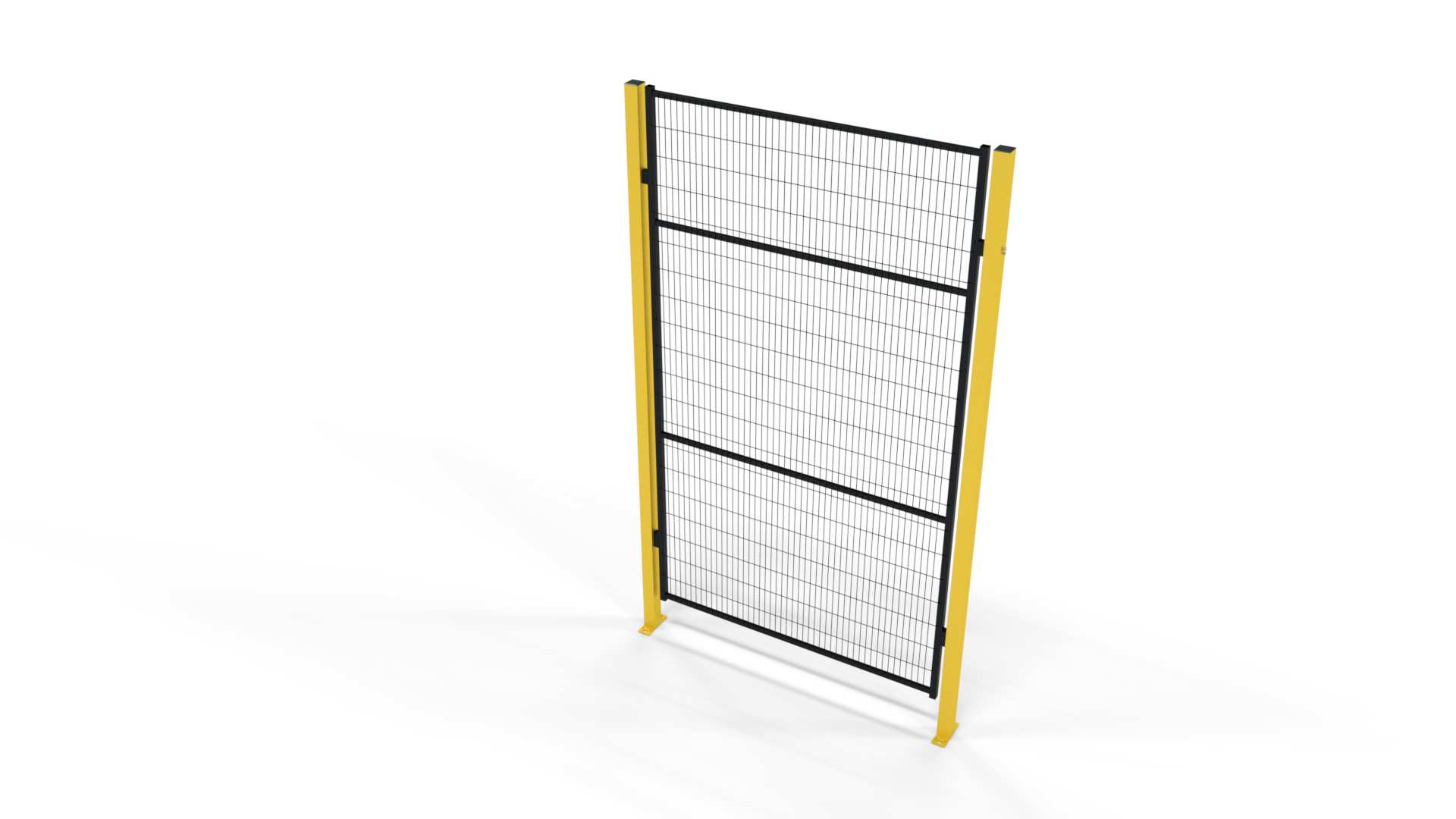
Wire mesh is the workhorse of industrial machine guarding. AMGS mesh panels use heavy-duty welded wire with a 20×100 mm opening in a fully welded steel frame — durable protection with clear process visibility at a lower cost than polycarbonate or solid fills.
Choose mesh when you need:
- Strong perimeter protection around robotic cells or automated lines
- Operator and supervisor visibility into the guarded area
- Lower cost on long straight runs and large cells
- Fast modular install with standard heights (1200–2700 mm)
Watch-outs
- Openings do not contain chips, coolant splash, or weld sparks
- Reach-through must be checked against safe stop distance and opening size
- For arc flash or sparks, pair with weld screen panels or solid sections
Explore wire mesh panels → · Robot guarding systems →
Polycarbonate panels — when to choose them
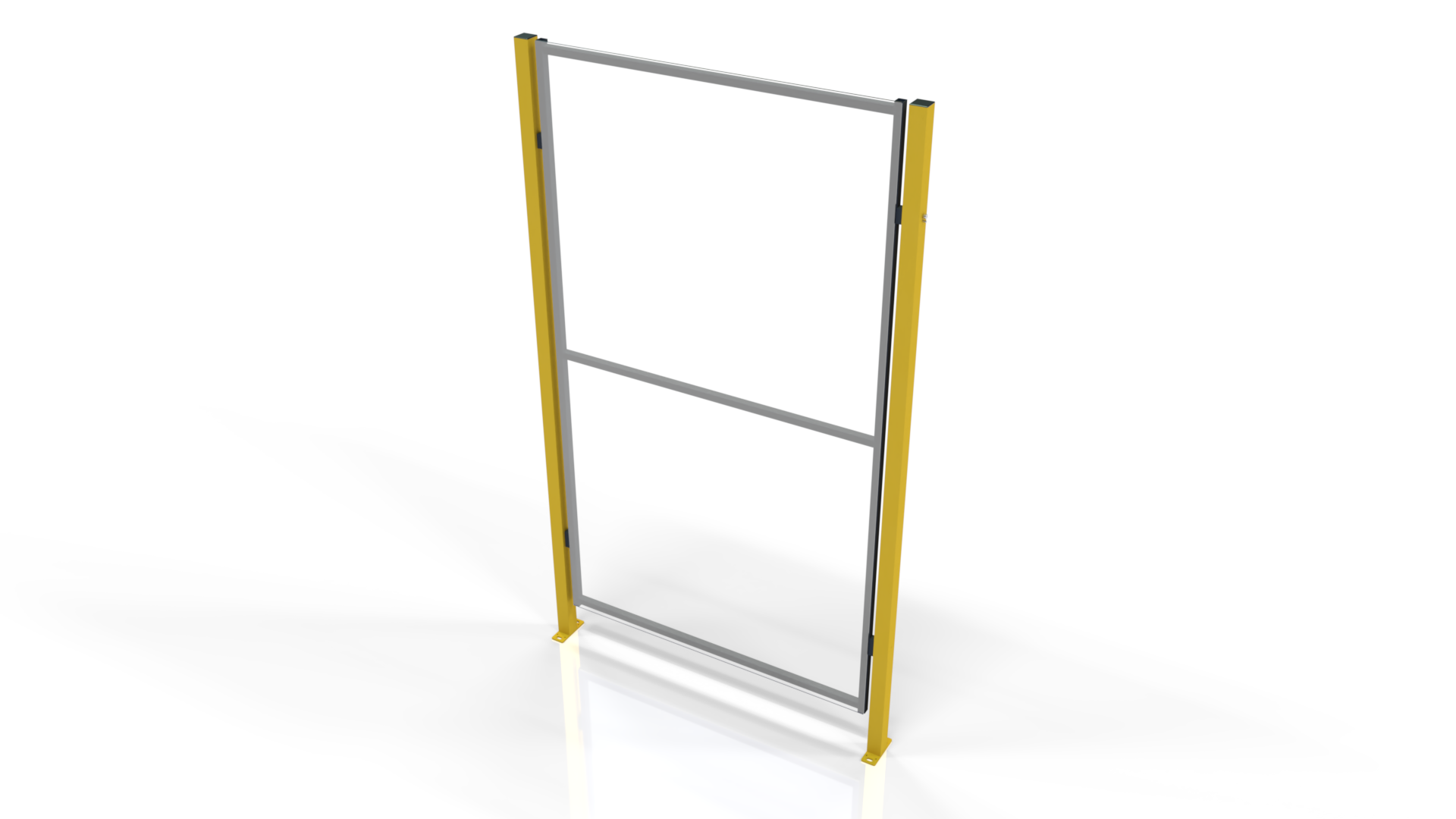
Polycarbonate panels deliver clear, impact-resistant protection in a steel frame. They are the right call when operators must monitor equipment continuously and mesh openings would let debris escape or create reach-through concerns.
Choose polycarbonate when you need:
- Unobstructed viewing at load/unload or quality stations
- Containment of light debris, mist, or splash
- A solid fill where hazard distance is tight
- Tinted options to reduce glare without blocking the process
Watch-outs
- Higher cost than mesh for full-perimeter use
- Not a substitute for laser-rated viewing glass in Class 1 laser rooms
Explore polycarbonate panels → · Configure a custom panel →
Solid steel panels — when to choose them
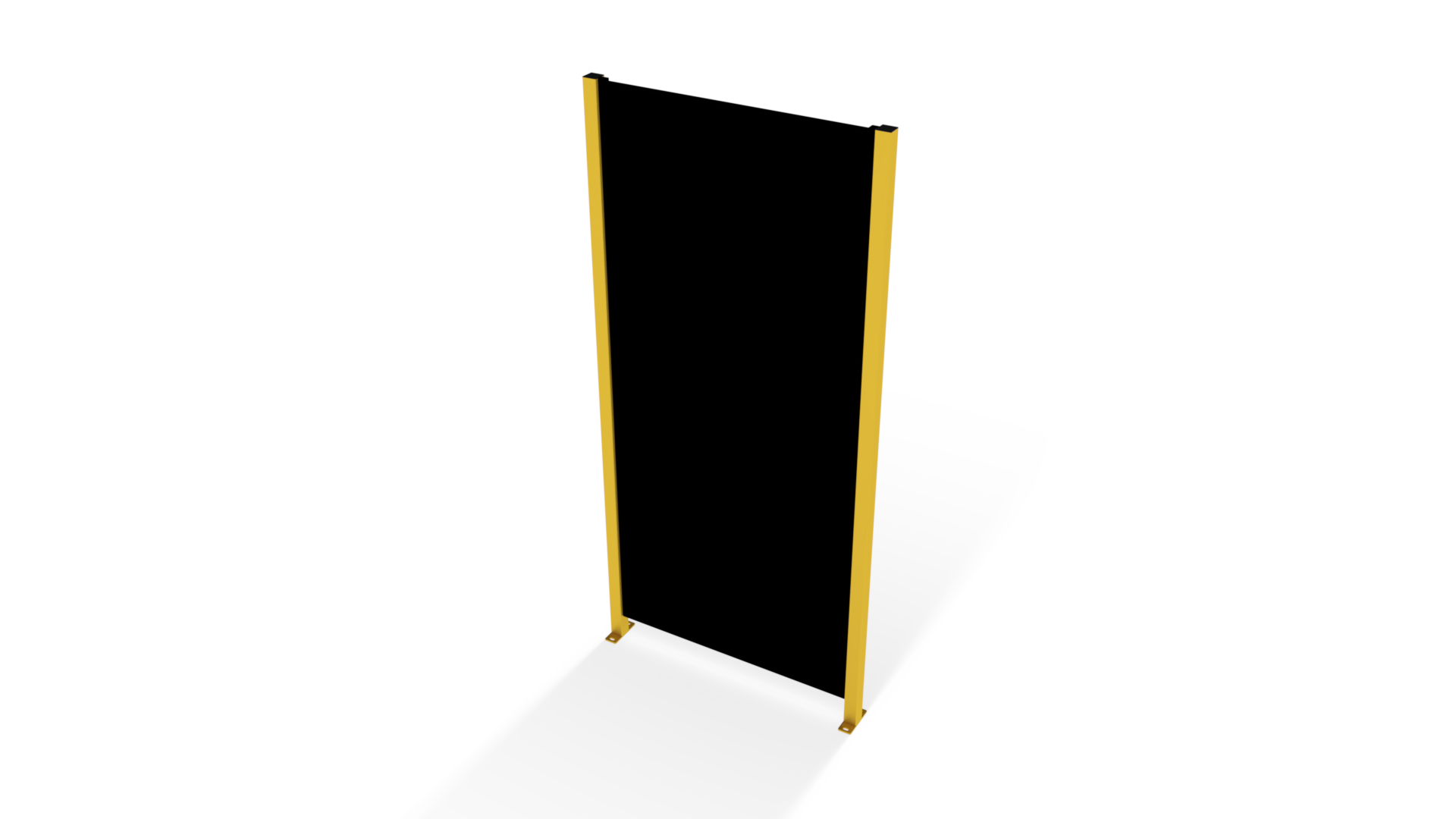
Solid steel panels provide maximum physical containment and visual privacy. They are rarely needed for an entire cell — most facilities use them strategically next to welding, grinding, or proprietary processes, with mesh or polycarbonate elsewhere for visibility.
Choose solid steel when you need:
- Spark, chip, or projectile containment
- Weld flash or process privacy
- Higher security / restricted viewing of equipment
- A durable barrier in high-abuse areas
Watch-outs
- No visibility — operators cannot see through solid walls
- Over-specifying solid panels on an entire perimeter raises cost and can hurt supervision
Explore solid steel panels → · Welding industry applications →
Use-case recommendations
| Application | Recommended primary panel | Often mix with |
|---|---|---|
| Robot cells / robotic fencing | Wire mesh | Poly at operator windows |
| Welding / spot weld | Solid or weld screen | Mesh on non-weld sides |
| Packaging / conveyors | Wire mesh | Poly at HMI stations |
| Material handling | Wire mesh | Solid near eject / chip zones |
| Assembly automation | Mesh + polycarbonate | Poly at inspection points |
| Laser welding rooms | Solid steel enclosure | Laser-rated viewing windows (not standard poly) |
| Food & beverage | Mesh or stainless options | Poly where washdown visibility matters |
Compliance notes that affect panel choice
Panel material does not by itself make a system “OSHA compliant.” Guarding must prevent employee contact with hazards under OSHA machine guarding requirements, and robotic systems should also follow ANSI/RIA industrial robot safety guidance (including R15.06).
- Opening size and distance to hazard drive mesh suitability — see our safe stop distance guide.
- Access points still need interlocked doors regardless of panel fill — see safety doors.
- Laser processes need dedicated enclosures, not open mesh — see laser safety rooms guide.
- For a full compliance checklist, use our machine guarding checklist and 2026 OSHA & ANSI robot guarding guide.
How to decide in three steps
- Map the hazard by zone — impact only, splash/debris, sparks/flash, laser, or privacy.
- Pick a primary panel for each zone — mesh for perimeter, poly for viewing/containment, solid for flash/security.
- Validate openings and distances — then configure the layout and request a quote.
Ready to specify panels?
Design a layout, configure custom panels, or talk to AMGS Engineering about a mixed mesh / poly / solid system.
100% U.S. manufactured · Hibbing, Minnesota · Nationwide shipping